W jakim stopniu Polacy, Węgrzy, Słowacy, Czesi, Niemcy i Austriacy podzielają zniekształcenia Holokaustu?
Publikacyjną linię działalności Katedry otworzył pierwszy tom serii wydawniczej Katedry UNESCO, przygotowany we współpracy z wydawnictwem Austeria. Raport powstał w ramach projektu „The Role of Holocaust Distortion in Populist Politics: A Psychological Perspective” finansowanego przez International Holocaust Remembrance Alliance (IHRA) i przedstawia wyniki badań prowadzonych w Polsce, Węgrzech, Słowacji, Czechach, Niemczech i Austrii.
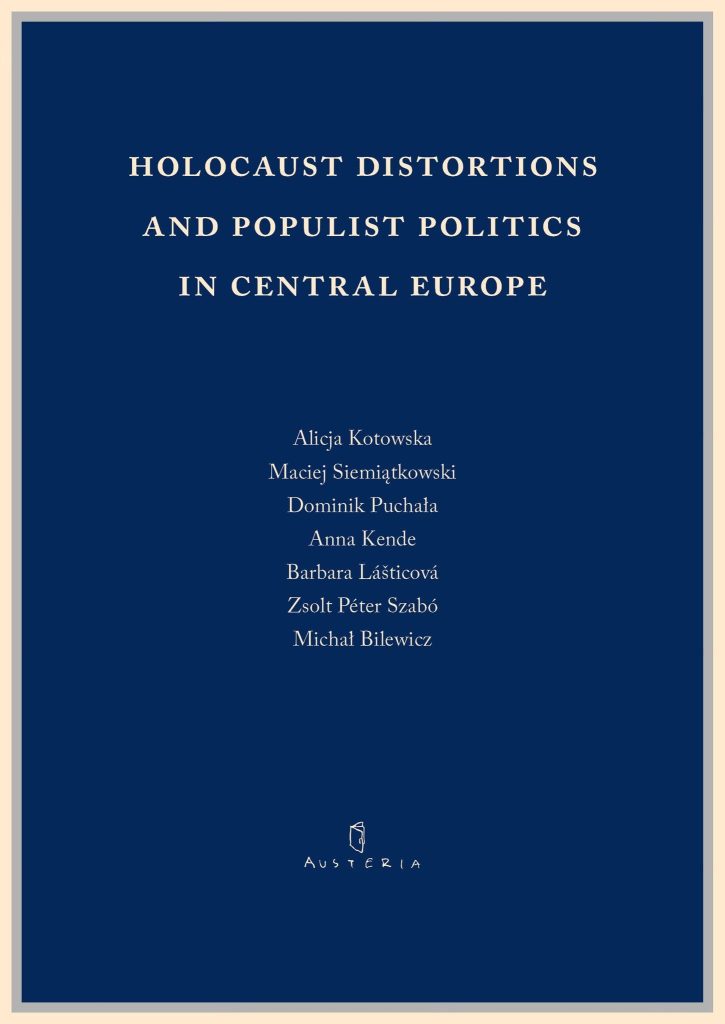
Autorkami i autorami raportu są: Alicja Kotowska, Maciej Siemiątkowski, Dominik Puchała, Anna Kende, Barbara Lášticová, Zsolt Péter Szabó oraz Michał Bilewicz.
Co inni badacze mówią o naszej pracy?
The authors show that when it comes to the relations between Jews and specific nations, people tend to have a positive bias to commemorate the role of their nation in history. Crucially, this selective remembering is related to populist beliefs. In the end, the report makes clear that the greatest threat to historical memory is not forgetting – it is remembering selectively.

dr Adrian Wójcik, Uniwersytet Mikołaja Kopernika w Toruniu
This is a rigorous, timely, and deeply useful report. It makes a significant contribution by showing that Holocaust distortion in contemporary Europe is not merely a matter of historical ignorance but is tied to broader populist attitudes and the instrumental political use of history.
dr Ayal Feinberg